ReDesignMate investigates how computational design can support the reuse and transformation of existing buildings rather than their replacement.
The tool generates alternative renovation scenarios from configurable design parameters, evaluates their structural implications, and compares façade systems through performance and carbon-footprint analysis.
A web interface connects directly to parametric Grasshopper models through Rhino Compute, allowing design alternatives to be generated and assessed interactively.
The project explores how environmental impact can become an active design parameter during early-stage renovation — helping compare interventions not only geometrically, but through their structural and carbon consequences.
- Retained structure
- Starting resource
- Configurable parameters
- Multiple alternatives
- Checked against
- existing structure
- Alternative systems
- Embodied carbon
- per alternative
- Geometry · structure
- · carbon
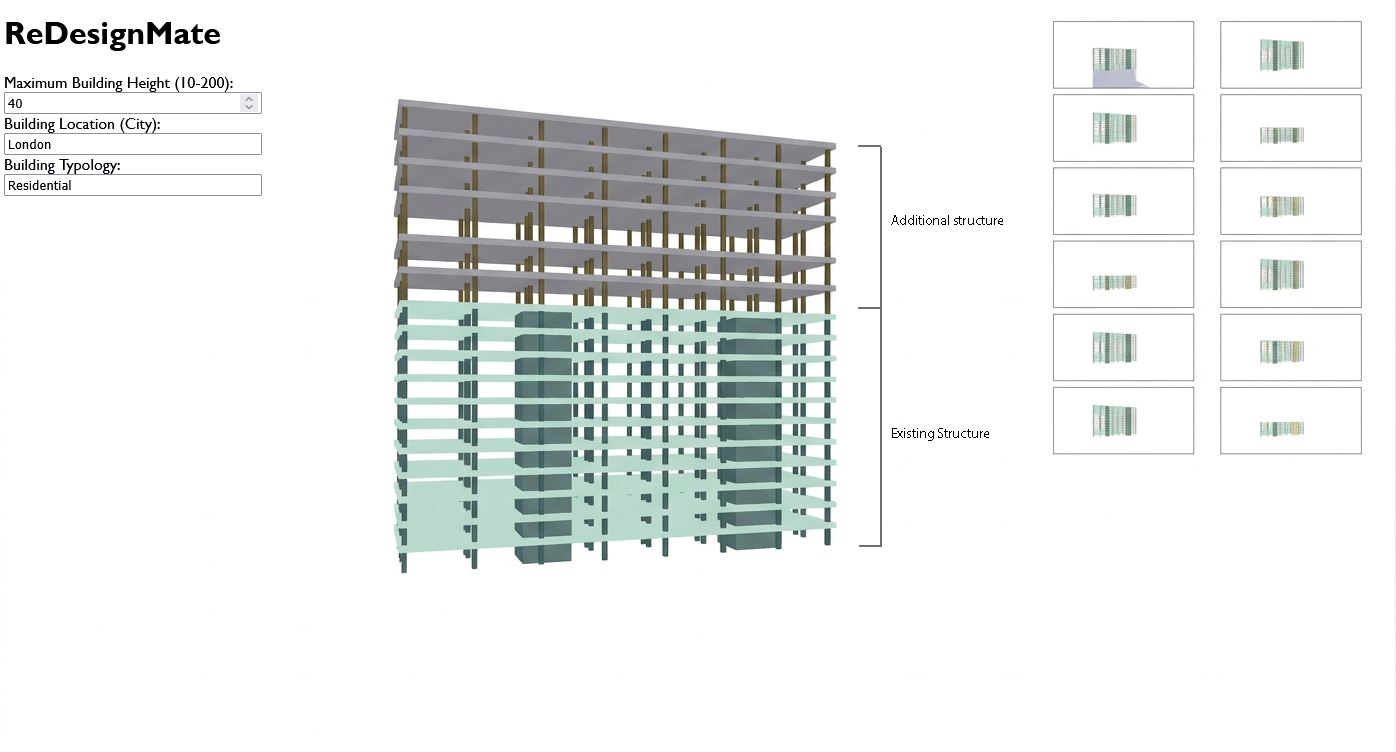
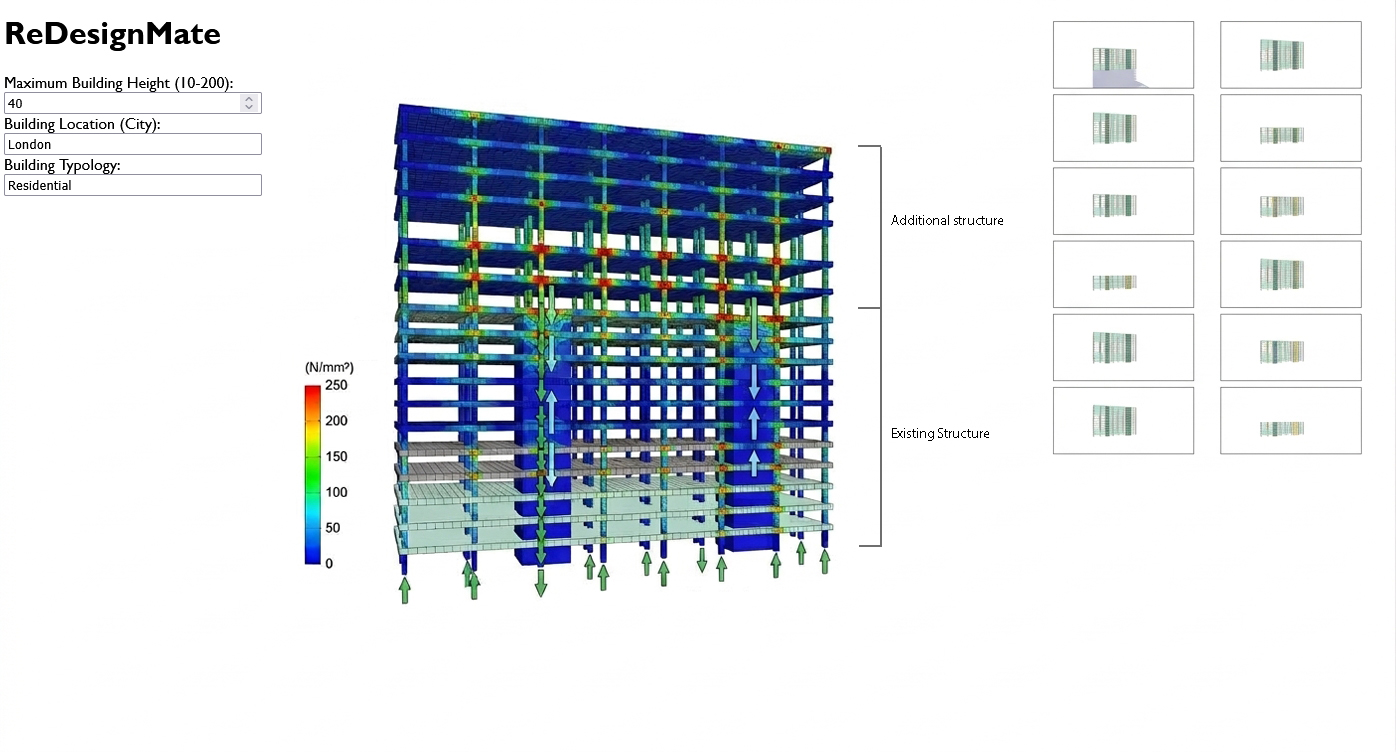
Configurable parameters produce multiple renovation and extension scenarios from the existing building.
Alternatives are tested against structural constraints and compared through façade, material and embodied-carbon performance.
The project explores how computational design can support adaptive reuse by treating existing buildings as resources to be transformed rather than replaced.